
Why Poor Waste Separation Is One of the Biggest Barriers to Reducing Food Waste
In many markets with weak sustainability culture and loose legislation, professional kitchens face a silent problem: waste isn’t separated properly at the source.
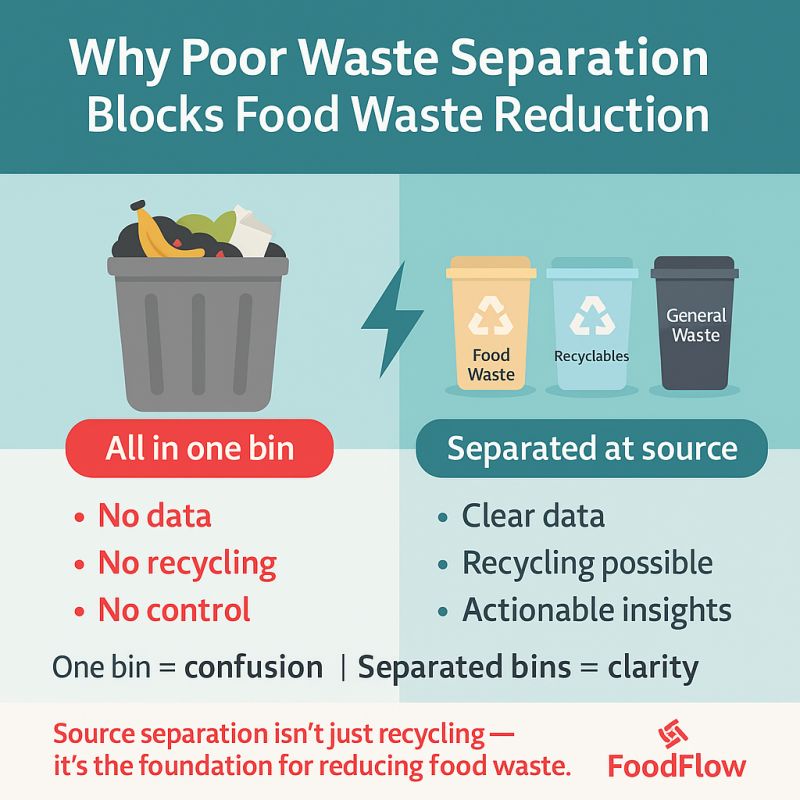
Instead, everything ends up in the same bin: leftovers, spoiled stock, packaging, even recyclables.
The result?
– No clear data on how much food waste you really have.
– Valuable materials like glass, cardboard, and plastics can’t be recycled.
– Food waste that could be measured, tracked, or even repurposed is lost in the mix.
When waste isn’t separated, managers lose the chance to understand where it comes from — and without that insight, reducing waste becomes nearly impossible.
The truth: Proper source separation isn’t just about recycling. It’s the foundation for any serious effort to reduce food waste.
How well is waste separated in your kitchen or region?